Grinding
Construction equipment manufacturers are the driving force behind modern infrastructure development. These companies design, produce, and supply a wide range of heavy-duty machinery used in construction, mining, road building, and infrastructure projects. Their products—including excavators, bulldozers, cranes, loaders, backhoes, and compactors—form the backbone of global development initiatives.
- Home
- Industries we serve
- Grinding
Let’s Start Work
Together
Please feel free to contact us. We will get back to you with 1-2 business days. Or just call us now.
How can we help?
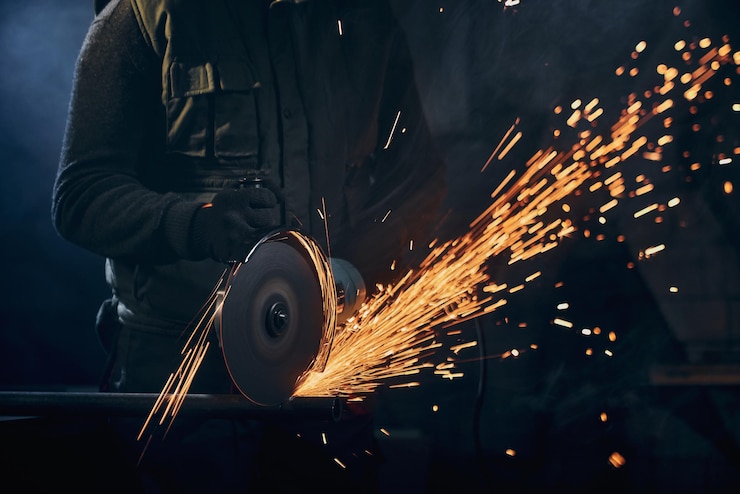
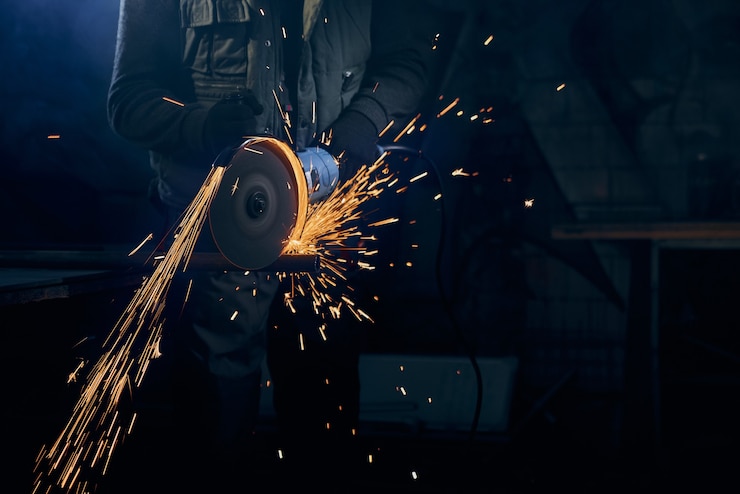
Grinding is a critical finishing process used to achieve high dimensional accuracy, superior surface finish, and tight tolerances on metal and non-metal components. It involves the use of an abrasive wheel or belt to remove small amounts of material, making it ideal for applications where exact specifications and fine surface quality are essential.
From aerospace engine parts and precision molds to cutting tools and hardened shafts, grinding ensures components meet strict quality standards while extending service life and performance.
Industry Significance
Grinding plays an essential role across manufacturing sectors, particularly in industries where precision and surface integrity are vital. It allows for:
Post-machining refinement for tight tolerances
Surface preparation for coating or plating
Component refurbishment and repair
Control of flatness, roundness, and parallelism
Industries such as aerospace, automotive, defense, medical, and tool manufacturing depend on grinding for its ability to deliver repeatable, controlled finishes under demanding conditions.
Process & Applications
Grinding involves material removal through abrasive contact, and can be adapted to meet diverse geometric and surface requirements. Key grinding methods include:
Surface Grinding – Used to create flat and smooth surfaces, often with tight thickness tolerances.
Cylindrical Grinding – Applied to round parts such as shafts, rollers, and bearing journals for OD/ID precision.
Centerless Grinding – Ideal for high-volume, consistent grinding of cylindrical parts without centers.
Tool & Cutter Grinding – Sharpens and reshapes cutting tools for optimal edge geometry.
Form Grinding – Profiles complex surfaces with precision-formed wheels or CNC control.
Common Applications Include:
Hardened shafts and spindles
Injection molds and dies
Cutting tools and end mills
Engine valve components
Bearing races and rollers
Precision flat and round parts
Grinding ensures high-quality finishes, micro-level precision (down to ±0.001 mm), and surface textures suitable for high-performance operations.
Technology & Innovation
Modern grinding technology is evolving to meet the growing demands of precision manufacturing. Key developments include:
CNC Grinding Machines – Offer automation, repeatability, and complex geometry capabilities
Superabrasives – CBN and diamond wheels for grinding hard materials like carbide, ceramics, and hardened steels
Adaptive Control Systems – Monitor forces and adjust parameters in real time for consistent quality
High-Speed Grinding – Reduces cycle time while maintaining precision
Coolant Filtration & Delivery – Enhances tool life and surface quality by reducing heat and contamination
These innovations help industries improve productivity, reduce scrap, and meet tighter engineering requirements.
Sustainability & Compliance
Grinding contributes to sustainable manufacturing through:
Precision refurbishment of worn parts to extend lifecycle
Low material removal rates, minimizing waste
Coolant recycling systems to reduce environmental impact
Compliance with global health and safety standards (e.g., OSHA, ISO 14001)
Integration with energy-efficient machinery and operations
When combined with repair and remanufacturing practices, grinding supports circular economy models in industrial production.
Challenges & Opportunities
Grinding presents specific challenges such as heat generation, abrasive wear, and the need for highly skilled operation. However, it also opens opportunities for:
Advanced tooling in aerospace, EVs, and renewable energy sectors
High-precision medical implants and surgical tools
Automation and smart control systems for consistent output
Value-added services like polishing, deburring, and dimensional inspection
Integration with machining, plating, and finishing lines for complete component solutions
In high-performance environments where accuracy and surface quality can make or break a part, grinding remains an indispensable process in the manufacturing toolkit.